














CME Coaching for Women Physicians: Finding a Common Language for Stress with DistressRX®
Discover how DistressRX® gives women physicians a common language for stress, regulation, and connection through CME coaching that transforms careers and lives.
If you ask most people, “Are you stressed?” — the answer is almost always yes.
But ask them to describe their stress, and you’ll often get a pause. There’s no shared language for stress. No universal way to articulate how it feels, what triggers it, or how it shapes behavior.
For women physicians — professionals navigating clinical demands, leadership pressures, and the emotional labor of caregiving — this communication gap can be especially costly. Stress becomes invisible until it isn’t. It shows up as burnout, conflict, decision fatigue, or disconnection.
That’s why DistressRX® exists. It’s not just another stress-management tool — it’s a revolutionary framework that gives language to human behavior under stress. It bridges the gap between what we feel and how we communicate it. And when we understand this language, something extraordinary happens: we begin to collaborate instead of alienate.
The Science and Soul of DistressRX®
DistressRX® is built on the foundational truth that stress is not one-size-fits-all. Each of us has a dominant stress type, a pattern of behavior and emotion that surfaces when we’re under pressure. Some withdraw, some over-control, some seek validation, and others act impulsively. These are not flaws — they’re adaptive survival mechanisms developed over time.
The beauty of this model lies in its precision. DistressRX® helps you identify your primary stress type through a validated psychological assessment, ensuring that your results are accurate and actionable. Once you know your type, you gain the language to describe your internal experience and to recognize it in others.
That’s where the transformation begins.
Why Women Physicians Need a Common Stress Language
Women physicians are among the most resilient professionals in medicine — yet they often operate in systems that don’t account for their emotional or cognitive load. The drive to care deeply, achieve highly, and maintain control under chaos can create a perfect storm of chronic stress.
Here’s the challenge: without a shared framework for understanding distress, even the most supportive teams can misinterpret each other’s behaviors.
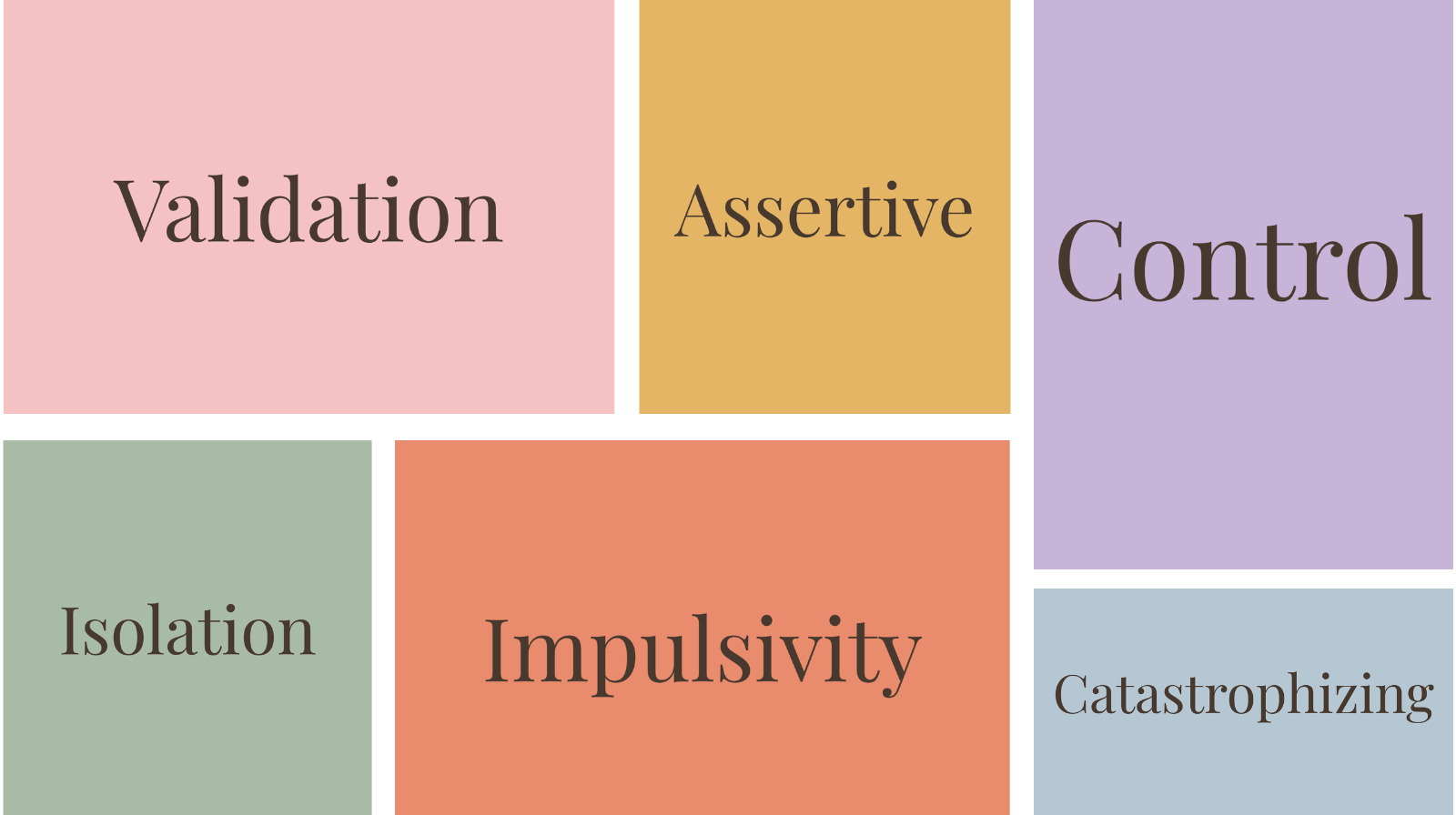
The “Assertive Distress” type may come across as intimidating when she’s really trying to regain control in uncertainty.
The “Validation Distress” type may seem overly emotional when she’s actually seeking safety through connection.
The “Control Distress” type may appear rigid when she’s attempting to stabilize an unpredictable environment.
When these dynamics play out in hospitals, clinics, and leadership teams — misunderstanding grows. Collaboration falters. And burnout accelerates.
DistressRX® changes this by giving every stress type a name, a story, and a framework for compassion.
The Relationship Matrix: A Map for Human Connection
Once you understand your stress type, the next step is realizing we don’t live in a vacuum. We are constantly interacting — with our partners, colleagues, patients, and teams — each carrying their own stress responses.
At first, this may sound overwhelming. After all, how do we navigate a world filled with competing emotional reactions?
That’s where the DistressRX® Relationship Matrix comes in.
The matrix reveals how different stress types interact — not just one-on-one, but across all combinations. It might seem complex at first glance, but once you learn a few guiding principles, it becomes second nature. This matrix doesn’t just describe relationships; it transforms them.
By understanding your own triggers and recognizing how others respond to stress, you can begin to collaborate instead of collide. Conflict becomes communication. Misunderstanding becomes empathy. And regulation becomes possible — even in the most high-pressure environments.
The 12 Stress Lenses: How We See the World Under Pressure
DistressRX® introduces another breakthrough concept — the 12 Stress Lenses. These lenses represent the unique ways we interpret the world when we’re stressed.
Imagine two physicians in the same meeting: one views feedback through a lens of perfectionism, while another sees it through a lens of self-doubt. The same words, completely different experiences.
Each stress type filters the world through these lenses differently. When we’re dysregulated, these distortions amplify, creating chaos in communication. But when we learn to regulate — to pause, name, and understand our reactions — we begin to see through a clearer lens.
That’s where insight meets compassion. And that’s where real growth happens.
Chaos or Clarity: The Power of Regulation
When multiple people are stressed, dysregulated, and viewing reality through different stress lenses, the result is predictable: chaos.
Think of it as an orchestra with every instrument playing a different song. Everyone’s working hard, but the outcome is noise.
Now imagine that same group understanding their patterns, naming their lenses, and learning to self-regulate. The music changes. Harmony returns.
In the context of CME coaching for women physicians, this shift is profound. Physicians who learn the DistressRX® framework develop emotional regulation skills that ripple outward — improving patient care, team dynamics, leadership effectiveness, and personal relationships.
DistressRX® doesn’t just reduce stress; it enhances professional performance and personal well-being through clarity, compassion, and communication.
DistressRX® in CME Coaching: Why It Matters
Continuing Medical Education (CME) isn’t just about clinical updates — it’s about human development. The most effective CME programs today integrate coaching, reflection, and self-awareness into the curriculum.
DistressRX® has been built into CME coaching for women physicians because it bridges evidence-based psychology with real-world medical leadership. Participants don’t just earn credits; they gain tools to understand themselves, their peers, and their patients.
Benefits of CME Coaching with DistressRX®
Enhanced Emotional Regulation
Learn how to shift from reactive to reflective, even in high-stakes moments.Improved Communication and Collaboration
Build teams that understand and respect emotional diversity.Burnout Prevention and Recovery
Recognize distress patterns early and apply strategies to restore balance.Leadership Growth
Develop self-awareness that drives authenticity, empathy, and authority.Whole-Person Healing
Integrate the mind, body, and emotional intelligence required for sustainable success.
Women physicians who experience this coaching often describe it as “life-changing” — not because it removes stress, but because it reframes it.
A New Language for a New Era
Imagine what could happen if everyone in your department, your organization — even your family — spoke the same language of stress.
Instead of interpreting someone’s tension as rejection, you’d understand it as protection. Instead of personalizing someone’s control, you’d see it as fear of chaos. Instead of reacting, you’d connect.
This is what DistressRX® makes possible. It gives us the words, tools, and insight to see ourselves and each other clearly.
When individuals regulate, relationships repair. When teams align, culture transforms. When organizations understand distress, innovation thrives.
And when an entire community — like women physicians — learns to communicate stress with compassion, the ripple effect reaches patients, families, and entire healthcare systems.
Do You Know Your Distress Type?
You can find out today.
The DistressRX® quiz is a validated tool, meaning your results are grounded in real psychometric science. It’s quick, accurate, and immediately illuminating. Once you know your type, you can begin the transformative work of integrating awareness, regulation, and relational insight into your daily life.
👉 Take the quiz here: https://www.thefitcollective.com/distressrx-tool
Understanding your type is the first step in reclaiming clarity, calm, and connection — in medicine and beyond.
Conclusion: From Chaos to Collaboration
DistressRX® takes something as complicated as human stress and makes it understandable, usable, and deeply human. It turns emotional chaos into collaboration, miscommunication into meaning, and survival into self-mastery.
Through CME coaching for women physicians, DistressRX® is not just transforming careers — it’s transforming lives.
The truth is, stress isn’t going away. But with the right language, awareness, and tools, it doesn’t have to define us.
We can define it — together.
6 Subtle Signs Your Nervous System is in Distress
When you understand your stress pattern, you stop fighting yourself — and can start retraining your nervous system with tools that will work specifically for your stress response.
Your stress response isn’t random — it’s patterned, and it’s trainable.
I’ve spent the past 3 years studying how our nervous system patterns drive our energy, mood, metabolism, and even our motivation. That research led me to create something I’m so excited to share with you…
The DistressRx™ Quiz
A new science-backed tool to help you uncover your stress subtype, and the specific way your nervous system responds under pressure.
Before you take it, see if any of these sound familiar…
6 Subtle Signs Your Nervous System Is in Distress
1️⃣ You’re doing “everything right” — but still feel exhausted.
Even with consistent workouts and nutrition, your energy doesn’t match your effort.
2️⃣ Your hormones — and your motivation — feel unpredictable.
You swing between drive and depletion, and nothing seems to stabilize it.
3️⃣ You’re self-aware but still reactive.
You know what’s happening, but your body hits overdrive before your brain can intervene.
4️⃣ You’re “people-ing” on empty.
You keep showing up for everyone else, but genuine connection feels draining.
5️⃣ You’ve lost the spark behind your goals.
You’re successful — but your success doesn’t feel fulfilling anymore.
6️⃣ You recover slower — from workouts, stress, or conflict.
Even small stressors take longer to shake off.
If a few (or all) of these sound familiar, you didn’t do anything wrong — it’s that your nervous system needs retraining.
That’s exactly what the DistressRx™ Quiz will help you discover.
Take 3 minutes to find out your unique Distress Type, and get personalized strategies to restore your regulation, energy, and balance.
→ Take the DistressRx™ Quiz Here
When you understand your stress pattern, you stop fighting yourself — and can start retraining your nervous system with tools that will work specifically for your stress response.
Excited to have you explore DistressRx™.
Xo,
Ali
New Conversations, New Solutions — Introducing DistressRx™
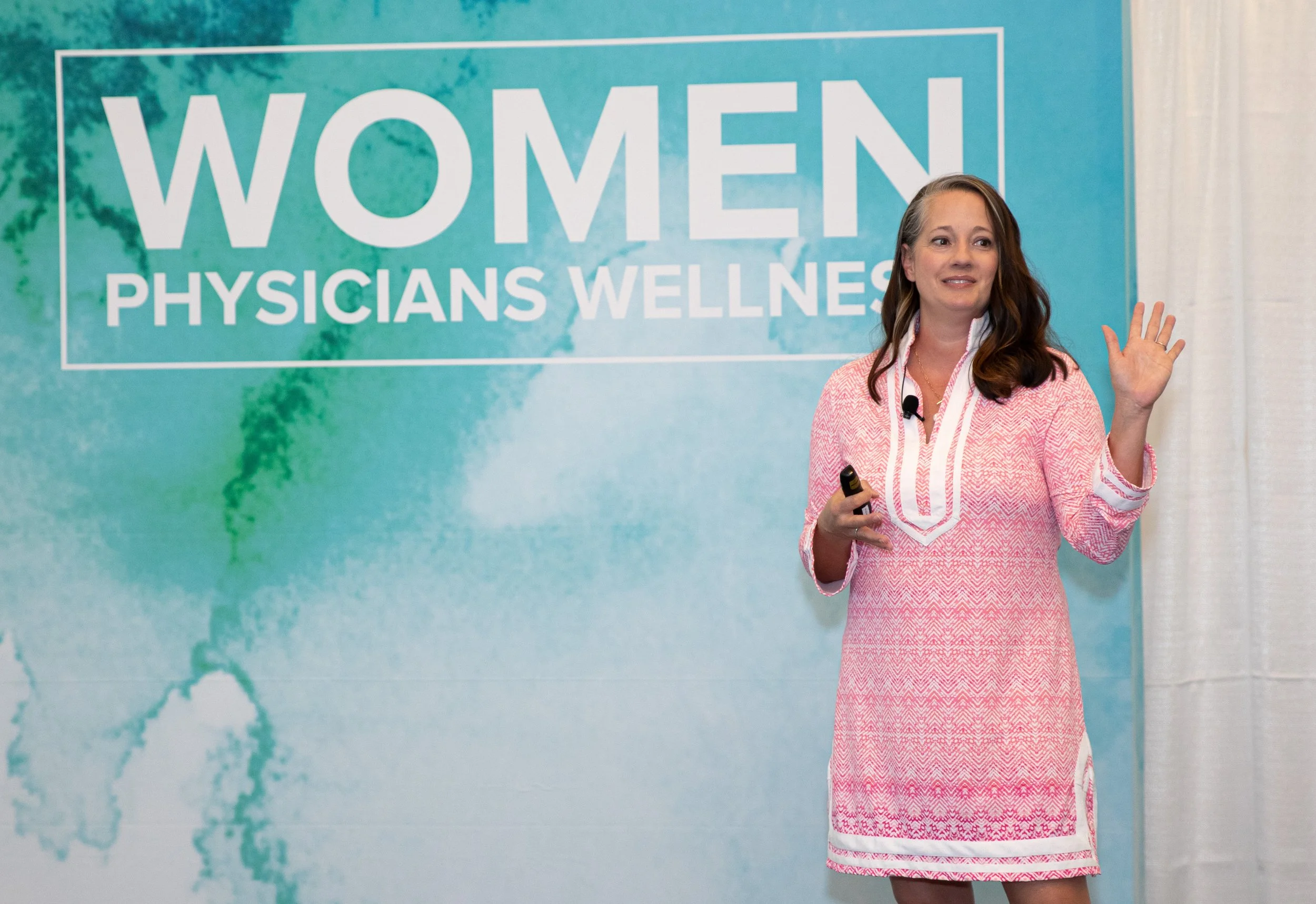
I just returned from the Women Physician Wellness Conference, and I’m still buzzing with gratitude and inspiration. It was an incredible experience — meeting so many amazing women, exchanging ideas, and sharing my newest work, DistressRx™.

Hi Friends,
I just returned from the Women Physician Wellness Conference, and I’m still buzzing with gratitude and inspiration. It was an incredible experience — meeting so many amazing women, exchanging ideas, and sharing my newest work, DistressRx™.
This work is truly changing the way we have conversations. It’s helping us uncover the real roots of emotional friction and find solutions to relationship challenges that once felt impossible to resolve.
During our role play exercise, we explored how the six Distress Types interact when they’re both dysregulated and regulated — and it was powerful to witness how understanding these dynamics can instantly shift communication and connection.
I’m so excited about what’s unfolding next, and I’d love for you to experience this work for yourself.
Take the DistressRx™ Assessment here: thefitcollective.com/distressrx-tool
Once you learn your type, head over to our podcast where we’re diving into each stress type and how to bring yourself back into regulation.
And for those of you curious about the research behind this framework, you can view our published abstract here:
thefitcollective.com/abstract
I’m thrilled to keep expanding this work — and the conversations it inspires.
Wishing you an amazing week ahead.
Talk soon.
xo,
Ali
What If Stress Wasn’t The Problem — But The Key?
Our DistressRx™ Method has become the backbone of our signature program, Transform®, and it’s more powerful than ever.

As we put together our 2026 year, I couldn’t be more excited to share the incredible updates we’ve made to our programs!
Our DistressRx™ Method has become the backbone of our signature program, Transform®, and it’s more powerful than ever. Instead of just fixing symptoms, we focus on healing the root cause.
The truth is, the root of many of our struggles is often dysregulation — what we call distress. Through the DistressRx™ framework, we help you:
Identify your dominant stress type
Use targeted tools to address what you’re actually experiencing
Learn how to show up better in relationships — and help those you care about do the same
Understand the 12 lenses of stress, so you can recognize how it shows up in your body, mind, and life
Combined with our world-class coaching and supportive community, this work is truly transformative, and we can’t wait for what’s ahead in 2026.
So how can you start engaging with the DistressRx™ content?
I created a 12-part podcast series that walks you through our entire framework.
Start with Episode 1 → HERE.
And if you’re ready to take the next step, check out our brand new Transform® 10.0 programming!
Learn more → HERE.
Or maybe you already know Transform® is for you — applications for 2026 are now open! Once you’re accepted, I’ll personally reach out to connect. This process ensures that the program is fully aligned with your goals.
Sending you so much love,
xo-
Ali
Do as I say… and now as I’m finally starting to do
So today, I’m taking my own advice: I’m celebrating this win. And I hope you’ll take a moment to celebrate yours, too.

In my Transform® group, I’m always reminding my members to celebrate their wins. We even have a “Wins” channel in our app — a space where everyone lists their victories, big and small. I love reading them, cheering them on, and highlighting a few in our weekly Cliff Notes.
But here’s my honest truth: I wasn’t doing the best job of celebrating my own wins.
And I know better! Because when I take the time to celebrate, it not only honors my journey — it inspires others to recognize their own.
This week, as I was gathering photos from our retreats since 2018, I had one of those “wow” moments.
When I looked at the photo from our very first retreat, I felt this warm, grounding sense of gratitude. Those early members were the first to believe in me, and they helped me see that what I was creating truly had impact.
Then I looked at our most recent photo from September 2025… and I was blown away. We’ve grown 10x since that first retreat!
But what I’m most proud of isn’t the growth itself — it’s the connection.
At our latest retreat, I looked out at the group and realized I knew every person by first and last name. Despite our expansion, our community still feels intimate. That’s deeply important to me.
Maybe it’s my roots — growing up in a doctor’s office where patients became family. I’ve carried that value into everything I do.
So today, I’m taking my own advice: I’m celebrating this win. And I hope you’ll take a moment to celebrate yours, too.
Sending you amazing vibes for an amazing week,
Ali
P.S. We’re now enrolling for Transform® 10 — our only enrollment this year! If you’ve been waiting for the right time, this is it. We’d love to welcome you and support you on your journey. Get all the details HERE.
Your Body is Smarter Than You Think
So often, we rely only on our head to make decisions. But when you are in a regulated emotional state, your body can actually guide you in powerful ways.

Did you know that your body is very, very, very, very, very smart?
So often, we rely only on our head to make decisions. But when you are in a regulated emotional state, your body can actually guide you in powerful ways.
What I love about this process is that you are never making a decision alone. When your body and mind are in alignment, you’ve created a strong team. Together, they build:
More self-validation
More self-trust
More self-confidence
Here’s the key: You must be regulated.
If you try to make decisions with your body while completely unhinged, you likely won’t love the outcome. Your mind will then work overtime to restore order, which leads to mental fatigue and negative emotions — a fast track into a downward spiral.
But it doesn’t have to stay that way.
I’ve created a 12-part Stress Series on my podcast that I think you’ll love. It’s the foundation of my latest research and work, designed to help you regulate, reconnect, and rebuild trust in yourself.
Start with Episode 1: Understanding Stress as a Signal, Not a Failure right here.
Your body is wise. Your mind is powerful. Together, they’re unstoppable.
Here’s to a week of decisions made in alignment,
xoxo-
Ali
P.S. If you’re ready to take this work even deeper, my year-long coaching program Transform® is where you’ll practice these tools with support, accountability, and community. It’s not just about learning; it’s about becoming the most aligned version of yourself. Learn more about Transform® 10 here.
Why I Never Got the Presidential Fitness Award
Here’s the truth: I didn’t get stronger by working longer. I got stronger by working smarter.
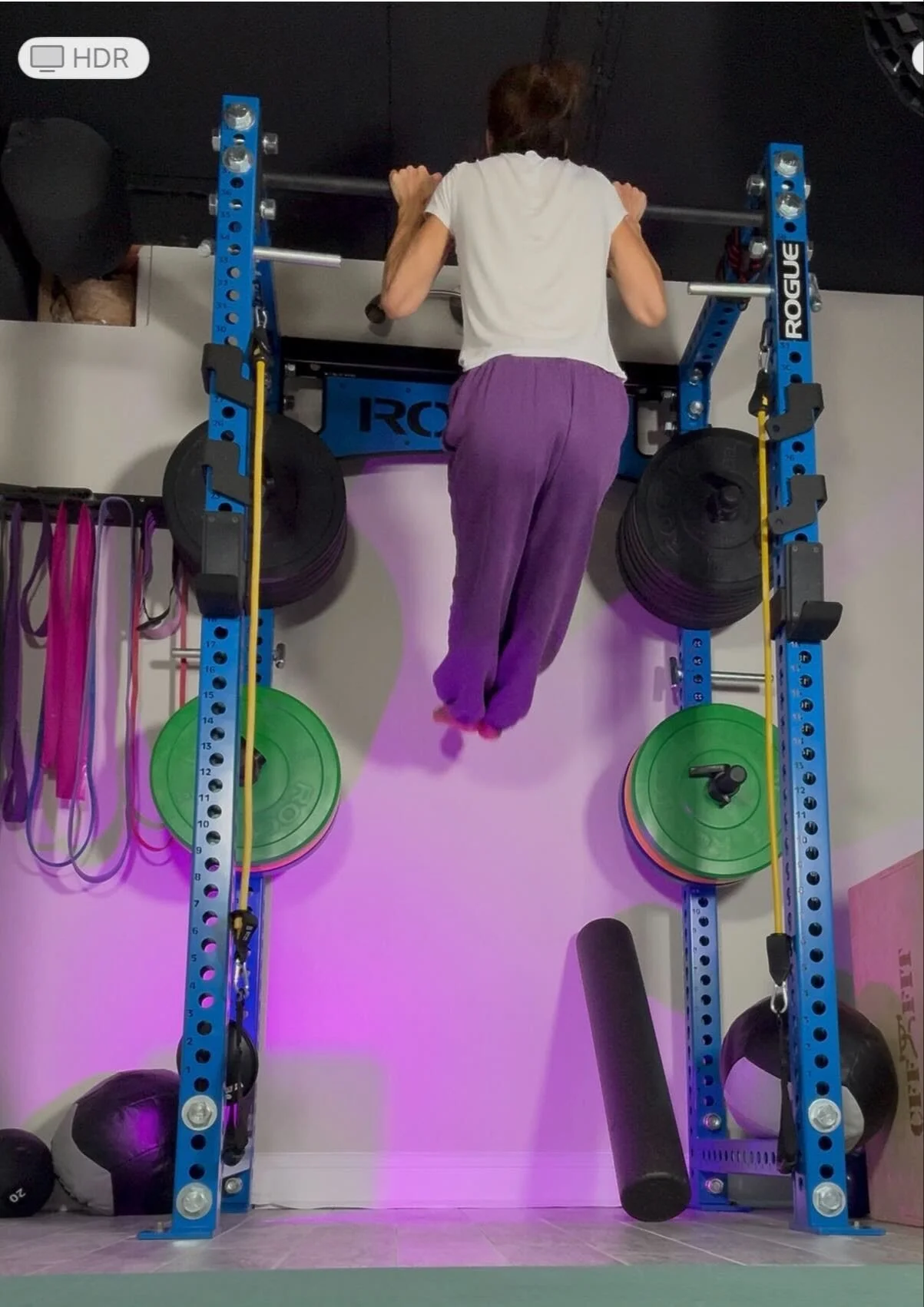
I never got the Presidential Fitness Award.
Why? Because I couldn’t do a pull-up.
Not underhand. Not overhand. Not any kind of pull-up.
It became a goal of mine — and I worked very hard. Really hard.
When I did CrossFit, I still couldn’t do a strict pull-up. But I knew that one day, when the time was right, it would happen.
Here’s the truth: I didn’t get stronger by working longer. I got stronger by working smarter.
I started tuning into my body and focusing on bodyweight, functional fitness. First, my push-ups became extremely strong. Then, I trained for every push-up variation I could think of. After that, I worked on negative pull-ups.
Finally, I got my first unassisted underhand pull-up. But the overhand grip? Still a struggle.
That’s when I added more core work and intentional lat engagement.
And at the age of 45… I did it.
My first unassisted, overhand pull-up.
I wanted it. I didn’t give up. And I didn’t let my past outcomes hold me back.
Do you see how much exercise can teach us about life?
As I head into the weekend to enjoy a music festival with Mark, the girls, and my father-in-law, I want to leave you with this:
All you have to do is dream and believe. Anything can happen.
Wishing you an incredible weekend,
xoxo-
Ali
What a Beta Fish Taught Me About Stress
Every day presents both big and small stressors. We need to honor them all, understand what triggers us, and become aware of how we respond.

Last weekend I had the privilege of leading my yearly retreat at Miraval in the Berkshires. By a turn of events, I released my brand-new Stress Rx content for the very first time.
It was an incredible three days of diving into our triggers, how we respond to them, and the tools that can help us be more emotionally regulated. The work is far from done — cracking the stress code has just begun.
My team is buckled up and hard at work analyzing data, making new hypotheses, and drawing conclusions. But in the meantime, I want to share a story about how my dominant stress subtypes showed up when I got home from the retreat…
A Fishy Stress Lesson
On Monday morning, I got to take my daughter to school. When I came back home, I noticed her beloved beta fish at the bottom of the tank. I thought he had passed.
Wanting her to have closure, I decided to leave him in the tank so she could say her goodbyes. She handled the news beautifully — until later that day when she told me, “Mom, he’s still alive!”
The next morning, he was still at the bottom. My plan was to give him a proper funeral and create a little memorial spot for her. But when I went to remove him, he suddenly started swimming all over the tank.
My ICU instincts kicked in. I made a quarantine ICU tank, medicated it, and moved him over. Within 8 hours, he was swimming and eating again.
What This Taught Me
This moment revealed two of my stress subtypes in action:
Validation Distress: I wanted my daughter to know she had done everything right, but really, I was projecting my own need for validation.
Impulsivity Distress: I wanted to bury the fish right away simply because I felt so uncomfortable having what I thought was a deceased pet in the tank.
These subtypes gave me such insight into how stress shows up, even in micro-stressors like this.
The lesson? Every day presents both big and small stressors. We need to honor them all, understand what triggers us, and become aware of how we respond.
And yes — I’m celebrating my ICU win.
What’s Coming Up
Transform® 10 – Early bird registration open until October 1st
Miraval 2026 Retreat – Deposits now being accepted
Sending you so much love,
Ali
The Shift I Didn’t Expect
If you find yourself in that strange, heavy, unexplainable space — stay curious. Stay present.

During our last days in Portugal, I felt something stirring in my body that I couldn’t quite name. It was an uneasy heaviness.
Maybe it was the anticipation of returning home, or the thought of both girls starting at a new middle school. Maybe it was my lack of sleep. Or perhaps it was the quiet worry about following through on promises I had made to myself — like creating more structured workdays that truly end.
It was a lot.
Instead of pushing the feeling away, I stayed curious with it. I shared it with friends. But as the days passed, it began to drain me — leaving me mentally foggy and even a little sad.
Then we returned home this past Sunday.
> The girls had a beautiful start to their school year.
> Mark and I built — and honored — a real work schedule for me this week.
> I returned to recording fun workouts.
> I was reunited with our sweet dog.
And suddenly, that feeling was gone. The heaviness dissipated. In its place? Lightness, hope, and happiness.
Almost as if I was letting go of something I didn’t even realize I was holding.
And with that release, a shift happened. Ideas that had been seeds for months began sprouting. New projects came forward. Inspiration returned. And I cannot wait to share my new stress work at our upcoming retreat at Miraval Berkshires.
So if you find yourself in that strange, heavy, unexplainable space — stay curious. Stay present. I believe it’s often the sign that a shift is already on its way.
Sending love,
Ali
The Magic of Sintra
This week I had the joy of exploring Sintra — a place that truly feels like stepping into a fairy tale.
Dear Friends,
This week I had the joy of exploring Sintra — a place that truly feels like stepping into a fairy tale. From the colorful castles perched on hills to winding paths through enchanted gardens, every moment was touched by magic.
As much as I’m excited to return home, Sintra will always hold a special place in my heart. I know I’ll be back again — very soon. Every time I come to Europe, I discover something new about the world and about myself. And every time, I feel the pull to return; it’s strong. While I miss home, I also find myself missing here.
On my way back to the U.S., I’ve been reflecting:
How can I take the best of both worlds with me?
What would it look like to merge the familiar comfort of home with the inspiration I find abroad?
Lately, I’ve even been having dreams that seem to suggest something exciting is on the horizon. I don’t know what it is yet, and that’s part of the magic. Allowing experiences like this to open doors to new possibilities is one of life’s greatest gifts.
So here we go, back to the USA — with a heart full of hope, curiosity, and gratitude.
Sending you love and encouragement to keep dreaming, creating, and staying open to the magic all around you.
With gratitude,
Ali

From the Cliffs of Lagos to You
So here’s a gentle nudge for you: it’s okay not to do more or be more. You are already perfect, exactly as you are. Right now. In this moment.

Hi my friends,
We just took a mini trip from Sintra down to Southern Portugal, to the magical town of Lagos — and it feels like a dream. The sun warms you up, the breeze cools you down, and you can walk for miles along the coast discovering tucked-away beaches filled with the most beautiful shells.
While here, I’ve noticed something powerful: whenever stress sneaks in through some random thought, everything shifts when I bring myself back to the present. The present moment really is the most incredible medicine we all have access to.
I also notice that I dream big when I’m inspired. And maybe — just maybe — the dream itself is the prize. I hold space for new ideas, but I also feel deep gratitude for where I am right now and what I’ve already created.
Do I need to accelerate? Or maybe slow down? Or maybe it doesn’t matter at all, because the pace that feels right today, in this very moment, is enough.
So here’s a gentle nudge for you: it’s okay not to do more or be more. You are already perfect, exactly as you are. Right now. In this moment.
Sending love from Portugal,
Ali

Finding Your Inflection Point
Allow yourself the peace of knowing this moment is available for you — without worry, fear, or overwhelm.

There are moments in life when it feels like nothing is going right.
You can’t get out of your own way. You wish things were different.
And deep down, what you really crave is peace…
Stillness.
Connection to the present moment.
The truth is, you’re standing at an inflection point — a choice between staying in the energy you’re in… or intentionally shifting toward one that serves you better.
But how do you shift into an entirely different energy zone when your mind feels stuck?
Here’s what I believe: while everyone’s process is personal, there are three constants.
Awareness – You have to recognize you want to shift.
Clarity – You have to know what you’re shifting from and to.
Strategy – You need a tool to help you move from where you are to where you want to be.
Here’s one simple strategy to try right now:
Take a deep breath.
Remind yourself that nothing that has happened in the past matters in this moment.
Know that this moment is yours. Yours to take back.
Now ask yourself:
How badly do I want to take this moment back?
Then, is making this shift non-negotiable for me?
If the answer is yes…
Then allow yourself the peace of knowing this moment is available for you — without worry, fear, or overwhelm. Presence yourself fully, and you’ll find the inflection point.
Sending you love from Portugal, where I’m practicing this exact same skill.
xo,
Ali
PS: Last Chance: Genetics Program with The FIT Collective
This is your final opportunity to join our Genetics Program. Due to the rising costs and logistical challenges of sourcing the kits, we will not be offering this program again. We have just five kits left — once they’re gone, they’re gone forever. Don’t miss your chance to gain personalized, science-based insights into your health that you can use for a lifetime.
Click HERE for all the details!

Gratitude, Portugal, and Our Sweet Lilly
Just before we were scheduled to leave for Portugal, life threw us an unexpected curveball.

Just before we were scheduled to leave for Portugal, life threw us an unexpected curveball.
Our sweet dog Lilly was doing her usual backyard zoomies when she spotted a bird and bolted after it. Mid-sprint, she let out a yelp and immediately stopped putting weight on her back right leg. It was heartbreaking. The next day, she was diagnosed with a CCL tear and a possible meniscal tear.
Our trip was just days away… and we postponed it.
Lilly had her surgery, and it went beautifully. But that first night? It reminded me of my time in the Neonatal ICU mixed with those blurry days of having a newborn. I barely slept, we were changing chucks (yes, dog version), and I even moved a bed into the kitchen so I could sleep right next to her. It was all hands on deck — and all heart.
We’re incredibly lucky to have amazing people in our lives. A beautiful family who owns Misguided Mutts (truly the best) takes care of Lilly whenever we travel, and they treat her like one of their own. With her movement on firm restriction, and two energetic kiddos at home, we realized rehab boarding might actually be best for her. Still, when we dropped her off, I felt stress, guilt, all the feelings.
But here’s what helped me most: gratitude.
I leaned into one of my top stress tools: naming what’s good, what’s working, what’s supportive. I thought about the people who step in when we can’t do it all. I thought about the care Lilly’s getting, the love around her, the privilege of traveling, and the space to hold it all — joy, grief, worry, and wonder.
Now, we’ve arrived in Portugal. Lilly is recovering. And my heart is full.
I’ll be sharing our adventure soon, but for now, thank you. Thank you for being here. Thank you for reading. Thank you for being part of my journey.
Sending you love — and a big dose of gratitude.
xo,
Ali

Redefining Stress, One Subtype at a Time
We believe that understanding your stress subtype and learning to regulate from within can change everything: your body, your brain, your relationships, your work.

We love keeping you in the loop — not just on what we do at The FIT Collective, but why we do it.
Over the past 8 years, I’ve made some big observations about stress. And honestly, it all started at home.
Our family was navigating a tough season, and we knew we needed help. We found an incredible DBT therapist, and the emotional regulation tools we learned truly changed our lives. That experience opened my eyes to something bigger.
I began noticing patterns in our coaching community. Women physicians were responding to stress in different — but predictable — ways. Some isolated, some pushed harder, some froze in analysis paralysis.
I kept thinking: What if we named these? What if we gave people a map — and tools — for their unique stress signature?
That question became a mission.
The Evolution of Our Stress Framework
It started with an assessment tool to identify distress subtypes — the six primary ways women doctors experience and respond to stress.
Then I developed a full curriculum to teach each stress type and offer personalized, effective coping mechanisms.
From there, I dove deeper into the relational dynamics — how each subtype interacts with the others in both regulated and dysregulated states.
And now, we’re exploring how stress shows up in the body, behavior, and emotions, and how each subtype is impacted.
We're currently running a study inside our Transform® physician coaching program, and I’m thrilled to share that early data is coming soon. What we’re learning is already changing how I practice.
Why Emotional Regulation Comes First
I no longer start a weight loss plan by handing someone their macros.
Because here’s the truth:
Why do we eat poorly? → Stress is part of it
Why do we skip exercise? → Stress is part of it
Why do our relationships or jobs suffer? → Stress is part of it
So... what if we fixed it at the core first — then layered on the tools?
That’s exactly what we’re doing.
What’s Coming in January: Transform® 10
Our upcoming Transform® 10 program (starting this January!) is rooted in this philosophy. It’s a revolutionary approach to healing burnout, optimizing health, and building sustainable change — by starting with emotional regulation, not willpower.
We believe that understanding your stress subtype and learning to regulate from within can change everything: your body, your brain, your relationships, your work. And ultimately, your life.
I’m more inspired than ever about what this means — not just for individuals, but for systems.
Want to Learn More?
If this resonates, check out our blog post on the six stress subtypes:
Understanding Stress Through Six Distress Subtypes: A Guide for Women Physicians
Stay tuned — there’s so much more to come.
With love and transformation,
Ali
Emotional Regulation: The Missing Prescription That Could Save Women Doctors
Women doctors face rising burnout, weight gain, poor mental health, and perimenopause symptoms — and it’s not just about stress. Learn how emotional regulation can be the missing prescription for healing from the inside out. Discover our physician coaching program, Transform, and upcoming Stress RX curriculum.
Medicine is hard. But for women doctors, it’s more than hard — it’s isolating, exhausting, and often unsustainable. Burnout isn't just a buzzword. It’s the slow unraveling of a brilliant, compassionate person whose light was never meant to burn out.
We see this every day in our physician coaching group, Transform. That’s why we’re doing more than offering nutrition and fitness guidance — we’re helping women doctors understand the emotional patterns keeping them stuck. We’re conducting research on stress and building a revolutionary curriculum. Because medicine won’t heal until we do.
Why It’s So Hard for Women in Medicine Right Now
Burnout Isn’t a Personal Failure — It’s a Systemic Setup
Women physicians are expected to do it all — with less support, less pay, and less time. Many of us entered medicine with a calling to help, to heal, to serve. But instead, we’re buried in EMRs, constantly interrupted, and silently absorbing microaggressions, caregiver guilt, and hormonal shifts that no one warned us about.
Keywords: burnout, poor mental health, perimenopause, menopause
You're expected to smile while charting until midnight.
You're supposed to manage everyone's emotions but never show your own.
You’re tired, angry, and considering non-clinical jobs — but feel ashamed to say it out loud.
The Impact of Chronic Stress on Our Bodies and Minds
Weight gain and inflammation (yes, stress messes with cortisol and insulin)
Emotional eating and adrenal fatigue
Increased reactivity: anger, irritability, or total shutdown
Poor sleep, worsening hot flashes, and libido loss
A shrinking window of tolerance before everything feels like too much
Keywords: weight loss, stress reduction, anger management
This isn’t about willpower. It’s about wiring. You don’t need to be told to “self-care harder.” You need to understand your stress response — and how to regulate it.
Emotional Regulation Is the First Step to Healing
Why We Must Understand Our Stress Response Implicitly
When stress hits, we don’t think — we react. We disconnect from ourselves. Our default settings take over: people-pleasing, perfectionism, productivity addiction. These are stress adaptations, not personality traits.
And while affirmations and breathwork help, they won’t touch the deeply conditioned responses living in our nervous systems. That’s why we must teach implicit regulation:
Recognizing your unique stress signature
Creating safety in your body before creating change
Using emotion-based tools before cognitive strategies
Building capacity before asking more of yourself
Until we address this, no macro count or workout plan will stick. Emotional dysregulation sabotages health goals from the inside out.
How We’re Leading This Movement — And How You Can Join
Transform: 72 CME Hours of Deep Personal and Professional Healing
At The FIT Collective, we built Transform®, a coaching program for women doctors that starts with core transformation. Then we layer: nutrition, movement, body composition, identity, emotional regulation, and legacy.
It’s where science meets self. And we’re now enrolling our January cohort.
Research-Backed Tools, Designed for Women Doctors
We are:
Conducting active stress research in our coaching cohorts
Launching a full Stress RX Curriculum in 2026
Working with institutions to scale this work to residency and faculty
Empowering non-clinical career exploration without shame or stigma
This isn’t just coaching. It’s a clinical intervention for a broken system. And it starts with the person in the mirror.
You Deserve Support That Sees All of You
If you’re navigating menopause symptoms while charting on your phone in the dark after bedtime…
If you’re wondering if leaving medicine is the only option left…
If you’re craving a community of women doctors who understand the emotional weight of this profession…
We’re here.
Transform enrolls now for January.
And the future of medicine starts with you.
WORK WITH ME THIS YEAR IN TRANSFORM®

Ultra Responders to GLP-1 Agonists: Who They Are and What You Should Know
Some individuals experience dramatic results with GLP-1 medications like Ozempic or Mounjaro—losing weight rapidly, suppressing appetite, and improving labs within weeks. Learn who these “ultra responders” are, why they react so strongly, and the pros, cons, and clinical considerations that come with accelerated success.
GLP-1 agonists like semaglutide (Ozempic, Wegovy) and tirzepatide (Mounjaro) have revolutionized obesity and metabolic health treatment. While many experience steady improvements, a unique subgroup—the "ultra responders"—see dramatic changes in weight, appetite, and metabolic markers. But what defines an ultra responder, and what should patients and clinicians watch for?
Who Are the Ultra Responders to GLP-1 Agonists?
Ultra responders are individuals who experience rapid, significant, and sometimes disproportionate results when starting a GLP-1 receptor agonist. These results can include:
Weight loss exceeding 15–20% of total body weight in under 6 months
Dramatic appetite suppression, sometimes verging on food aversion
Improved glucose control and insulin sensitivity within weeks
Increased energy or cognitive clarity due to metabolic shifts
Common Traits of Ultra Responders
While ongoing research is still exploring predictors, ultra responders often have one or more of the following:
Higher baseline insulin resistance or visceral adiposity
Strong GLP-1 receptor sensitivity, which may be genetic
Metabolic inflexibility that rapidly corrects with GLP-1 initiation
High baseline inflammatory markers that improve quickly
Certain gut microbiome profiles favoring rapid hormonal response
Why Do Some People Respond So Strongly?
The exaggerated response often comes down to biological sensitivity. GLP-1 medications work by slowing gastric emptying, decreasing hunger signals, and improving insulin signaling. If an individual has:
A hyperactive GLP-1 receptor profile
Severe pre-treatment metabolic dysfunction
A compromised hypothalamic hunger regulation loop
…then even low doses may yield outsized clinical outcomes.
Neurobiology also plays a role: GLP-1s interact with reward pathways in the brain, meaning patients with food addiction or emotional eating patterns may find sudden relief in their food thoughts or cravings.
Pros of Being an Ultra Responder
Being an ultra responder isn’t inherently negative. In fact, it can offer several clinical benefits:
Rapid metabolic correction: blood sugar, A1C, and inflammatory markers often improve fast
Motivation boost: early results can drive long-term lifestyle changes
Lower medication burden: some may reduce or eliminate other prescriptions
Better joint function and energy: due to early fat loss, especially visceral and intramuscular fat
Cons and Considerations
However, rapid change can have downsides. Key concerns include:
1. Muscle Loss Risk
Without adequate resistance training and protein intake, fast weight loss may come with disproportionate lean mass loss—affecting metabolism and function long-term.
2. Food Aversions and Malnutrition
Some ultra responders report extreme satiety or nausea, leading to low-calorie intake and potential micronutrient deficits.
3. Psychological Impact
The sudden shift in body image, hunger patterns, and relationship with food can be emotionally disorienting, especially if weight has been a long-standing identity issue.
4. Medication Tolerance & Rebound Risk
Over time, some ultra responders become less tolerant to the medication, or experience weight regain if the drug is stopped without a strong behavioral foundation.
What to Watch For as a Clinician or Patient
If you're working with—or are—an ultra responder, consider these monitoring and strategy tools:
Track body composition, not just weight—InBody scans, DEXA, or even tape measures
Assess strength and energy levels monthly to ensure muscle preservation
Encourage resistance training at least 2–3x per week
Use a mindful macro strategy to maintain nutrition even when appetite is low
Offer psychological support, coaching, or group support for identity shifts and emotional regulation
Conclusion
Ultra responders to GLP-1 medications demonstrate the potential power of these drugs, but they also require a strategic, multidisciplinary approach. When supported with nutrition, exercise, and emotional wellness, ultra responders can harness their early gains into sustainable, long-term health.

The Clinical Value of Stool and Hair Mineral Testing in Nutrition Management
Discover how stool and hair mineral testing provide powerful insights into gut health, micronutrient status, and toxin exposure. Learn how physicians can use this data to personalize nutrition strategies, improve patient outcomes, and optimize functional medicine protocols.
A Precision Approach to Micronutrient and Gut Health Assessment
As the demand for personalized nutrition rises, clinicians are turning to functional diagnostic tools like stool and hair mineral testing to uncover deeper insights. These tests provide a non-invasive window into a patient's nutrient status, detoxification potential, and gastrointestinal function—making them a compelling adjunct in evidence-informed nutrition management.
What Can Stool and Hair Mineral Testing Tell Us?
Stool Testing: Functional and Microbiome Insights
Stool analysis offers valuable data beyond standard digestive symptoms:
Microbiota Composition: Identifies imbalances in beneficial vs. pathogenic flora.
Digestive Enzymes: Detects insufficiencies in pancreatic elastase and bile acid production.
Inflammation Markers: Calprotectin and secretory IgA levels flag intestinal immune activation.
Parasitology & Pathogens: Screens for yeast, parasites, and bacterial overgrowth.
Short-Chain Fatty Acids (SCFAs): Indicates prebiotic effectiveness and colonic health.
Beta-glucuronidase: Assesses estrogen detox and cancer risk biomarkers.
Hair Mineral Testing: Long-Term Mineral Trends
Hair mineral analysis offers a retrospective look into mineral deposition and heavy metal exposure:
Macrominerals: Calcium, magnesium, potassium, and sodium levels reflect adrenal and metabolic trends.
Trace Minerals: Zinc, selenium, copper, and chromium give insights into immunity, oxidative stress, and glucose regulation.
Toxic Metals: Identifies exposure to mercury, lead, arsenic, aluminum, cadmium.
Ratios and Patterns: Zinc/copper, Ca/Mg, and Na/K inform stress and thyroid/adrenal patterns.
Pros and Cons of Stool and Hair Mineral Testing
Advantages
Non-Invasive & Patient-Friendly
Long-Term Trends (especially in hair testing)
Useful for Chronic, Unexplained Symptoms
Supports Functional and Lifestyle Medicine
Complements Blood Labs for Deeper Insight
Limitations
Not Diagnostic Alone
Variability in Lab Standards and Interpretation
Hair Testing Affected by Hair Products or External Contamination
Limited Insurance Coverage—Often Out-of-Pocket
How Do Clinicians Use This Data?
Stool and hair mineral test results can directly inform treatment protocols:
Targeted Supplementation (e.g., correcting zinc/copper imbalance or low selenium)
Detox Protocols (supporting liver pathways in heavy metal burden)
Microbiome Restoration (using probiotics, prebiotics, or antimicrobials)
Stress and Adrenal Support (based on Na/K and Ca/Mg ratios)
Diet Customization (modifying intake based on digestive and absorption profiles)
Are There Alternative Assessment Methods?
Yes, clinicians may also use:
Serum/Blood Testing: Best for acute changes (e.g., serum magnesium, ferritin).
Organic Acids Testing (OAT): Metabolic intermediates for nutrient deficiencies.
Micronutrient Testing (e.g., SpectraCell): Lymphocyte-based long-term nutrient status.
DEXA or InBody Scans: For body composition changes related to mineral status.
Each has its strengths, and multi-modal testing often yields the most clinically relevant picture.
Is This Testing Cost-Effective?
For the right patient—yes.
Hair Mineral Testing: ~$100–$150 per test, often done annually.
Comprehensive Stool Testing: ~$250–$450, depending on markers selected.
Considering the cost of chronic unresolved symptoms and unnecessary treatments, these tests can be cost-effective tools in:
Complex fatigue syndromes
Chronic gut dysfunction
Weight plateaus despite dietary adherence
Hormonal imbalance investigations
Detoxification planning in high-risk patients
Final Thoughts: A Functional Lens for Deeper Patient Insight
Stool and hair mineral analysis offer physicians a functional, systems-based lens to examine nutritional and toxicological imbalances. While not replacements for standard labs, they can reveal hidden contributors to chronic dysfunction and offer actionable data for personalized interventions.
When paired with patient history, symptom tracking, and clinical acumen, these tools can enhance outcomes in a cost-efficient, non-invasive way—bridging the gap between symptoms and solutions in modern integrative care.
Why Doctors Need Real Nutrition Guidelines—Not Just “Eat Less, Move More”
Medical providers need more than generic advice to guide patients in sustainable health. Discover where to get evidence-based nutrition training for doctors, earn up to 48 CME credits, and learn how The FIT Collective’s Nutrition and Obesity Prevention Program equips physicians with real tools to counsel patients on metabolic health, weight loss, and lifestyle change—beyond what AI or ChatGPT can provide.
Medical Providers Deserve Better Tools to Guide Their Patients
As physicians, we’re trained to diagnose, treat, and manage disease—but when it comes to nutrition counseling, the tools we’re given are often outdated or vague. Telling patients to “eat less and move more” not only lacks specificity, it also ignores the complex physiology, psychology, and environment in which health behaviors occur.
The truth is: our patients need more from us, and we need more from our training.
With rising rates of obesity, metabolic syndrome, insulin resistance, and hormone-related weight challenges, the demand for evidence-based nutrition guidelines for doctors has never been higher. And while AI tools like ChatGPT can assist in formulating general nutrition plans, they are not a substitute for expert, physician-led education. These tools are only as effective as the knowledge base of the clinician using them.
Where to Get Evidence-Based Nutrition Training for Physicians
If you're a physician searching for “nutrition training for doctors,” “CME for obesity prevention,” or “how to counsel patients on nutrition”, you’re not alone. Thousands of providers are seeking clinical tools that go beyond generalized advice.
The Nutrition and Obesity Prevention Program by The FIT Collective® offers a comprehensive, ACGME-friendly training pathway with up to 48 CME credits, including 30 Group 2 credits toward Obesity Medicine board certification. It includes:
A full year of progressive strength programming (10 min/day, 3x/week)
Evidence-based longevity and metabolic health strategies
Real-time provider scripts and clinical tools
Step-by-step guidance for individualized patient care
Whether you're in primary care, endocrinology, pediatrics, or integrative medicine, this program gives you the confidence and clinical clarity to support patients in sustainable, science-based behavior change.
Why Training Matters More Than Ever
Today’s patients are asking more complex questions—and showing up with higher expectations. They’re Googling everything. They’re biohacking. They’re listening to influencers. And yes, they’re even bringing in AI-generated nutrition plans.
As physicians, we must meet this moment with credibility, clarity, and compassion. That starts by deepening our knowledge beyond our initial medical training. We cannot afford to be passive messengers of vague advice. We must be active guides rooted in science and empowered by real training.
The Nutrition and Obesity Prevention Program from The FIT Collective® can help fill the gap to allow medical professionals to help our patient’s best.
🔗 Explore the Program & Earn 48 CME Credits
Follow on Instagram: @alinovitskymd

Redefining the Doctor-Patient Relationship — And Why It Matters Now
The landscape of medicine is shifting — and with it, the expectations, roles, and relationships at its core.

The landscape of medicine is shifting — and with it, the expectations, roles, and relationships at its core. If you’ve ever found yourself wondering:
Why doesn’t my doctor have time to truly listen?
Can physicians support me as a whole person, not just a diagnosis?
Is there a more empowering way to approach care?
You’re not alone. These questions aren’t just valid — they’re vital.
For many of us in medicine, the traditional doctor-patient relationship no longer fits the needs of modern life. We’re not just being asked to treat symptoms; we’re being called to connect, coach, and co-create health alongside our patients.
And that’s where the magic lies.
From Prescription to Partnership: A New Way to “Doctor”
People often ask me: “Are you still practicing medicine, or are you coaching now?”
The truth is, I’m still a doctor. But I’m not practicing medicine the way I was trained to in 2002.
Today, I define “doctor” by its Latin root: docere — to teach.
That means helping women:
Understand metabolism and muscle physiology
Tune into emotional signals with compassion
Build physical and mental strength
Reignite purpose, both in and outside of medicine
Yes, it looks a lot like coaching. But what I’m doing is doctoring at its deepest level — with presence, intention, and love.
Why the Doctor-Patient Model Is Evolving
We’re in a powerful paradigm shift.
Patients don’t just want prescriptions; they want partnership. They’re seeking integration between mind, body, and environment. They’re asking for care that:
Listens without rushing
Educates without condescension
Guides without judgment
Fosters agency over dependence
For many physicians — especially those who’ve faced burnout or disconnection — this approach is bringing us back to life.
Coaching as a Healing Extension of Medicine
Coaching isn’t a step away from medicine. It’s a step deeper into it.
Through my programs at The FIT Collective, I sit with women physicians, high-achievers, and health seekers to explore:
Metabolic health during GLP-1 therapy
Muscle strength and preservation in midlife
Emotional resilience and distress tolerance
Nutrition rooted in data and intuition
Self-trust and mindset transformation
This is how I doctor now. And it’s profoundly humbling to witness how people begin not just to heal, but to understand their healing.
How We Reignite the Doctor-Patient Relationship
We Make Time for the Human Story
Listening deeply reveals what’s often missed in a 15-minute visit.We Educate, Not Just Diagnose
Empowerment starts with understanding your own body.We Create Safe, Shame-Free Spaces
No one transforms under judgment. Safety is the foundation.We Build Relationships of Reciprocity
This is a partnership — not a power dynamic. We grow together.
A Return to Purpose
Some days, I still miss the white coat and hospital badge. But I’ve come to understand:
I didn’t leave medicine. I returned to it.
To why I became a doctor in the first place. To listen, to teach, to help others remember their strength.
If you’re a woman doctor ready to reconnect with your calling — or a patient seeking care that sees all of you — you are not alone.
We’re building something new.
And it’s exactly what medicine was always meant to be.
With gratitude and hope,
Ali

Redefining the Doctor-Patient Relationship in the New Era of Medicine
In today’s evolving healthcare landscape, doctors are redefining what it means to heal. As a board-certified physician turned coach, I’m often asked: “Are you still practicing medicine?” The answer is yes—just not in the traditional way. The doctor-patient relationship is shifting from prescription to partnership, and I’ve never felt more aligned with my calling. Coaching is not a departure from medicine—it’s a return to the heart of it. With gratitude to leaders like Dr. Brooke Buckley, who helped me see the power of this transformation, I now serve by guiding women through muscle preservation, mindset work, GLP-1 support, and emotional resilience. This is how doctors are changing to meet today’s needs—and it’s how we reignite connection, trust, and healing.
Why the Doctor-Patient Relationship Needs a Redesign
The landscape of medicine is evolving—and so are the roles of those who practice it. Today, more people are searching “how are doctors changing?”, “why doesn’t my doctor have time to listen?”, or “can doctors coach me instead of just treating symptoms?”
These questions aren’t just valid—they’re vital.
For many of us in medicine, the traditional doctor-patient relationship no longer fits the needs of modern life. We’re not just being asked to treat diagnoses—we’re being called to connect, coach, and co-create health alongside our patients.
And I believe that’s exactly where the magic lies.
From Prescription to Partnership: A New Definition of "Doctoring"
I’m often asked, “Are you still practicing as a doctor? Or are you just coaching now?”
Here’s the truth:
I am a doctor first. I will always be a doctor.
But I’m not doctoring the way I was trained to in 2002. I’m not limited to 15-minute visits, ticking boxes on an EHR, or treating labs instead of people.
Instead, I’m reclaiming the full meaning of the word doctor—from its Latin root, docere, which means “to teach.”
Today, I’m teaching women how to:
Understand their metabolism and muscle physiology
Tune into their emotional signals with compassion
Develop sustainable strength—physically and mentally
Reignite their purpose, both in and outside of medicine
And yes, that looks a lot like coaching. But what I’m doing is doctoring at its deepest level—with presence, intention, and love.
How Doctors Are Changing to Fit the Needs of a New Generation
We’re in a paradigm shift. Patients aren’t just seeking information; they’re seeking integration. They want to understand how their body, mind, emotions, and environment all work together.
They want a doctor who:
Listens without rushing
Educates without condescending
Guides without prescribing shame
Offers tools that create agency, not dependency
In this new model, the best medical care feels more like a partnership than a power dynamic.
And for doctors like me—who’ve walked the tightrope of burnout, compassion fatigue, and system-induced disconnection—becoming more human in our approach has brought us back to life.
Coaching as a Healing Extension of Medicine
Let me be clear: Coaching isn’t a step down from medicine—it’s a step deeper into it.
Through my programs at The FIT Collective, I get to sit with women physicians, high-achievers, and health seekers and ask: What if we did this differently?
We focus on:
Metabolic health during GLP-1 therapy
Muscle preservation and strength in midlife
Emotional resilience and distress tolerance
Nutrition that honors intuition and data
Self-trust and mindset transformation
This is how I doctor now.
And it’s profoundly humbling to witness what happens when we empower people not just to heal—but to understand their own healing process.
How We Reignite the Doctor-Patient Relationship
1. We Make Time for the Human Story
When we slow down, we hear the real concerns. We see the patterns. We offer compassion before we offer solutions.
2. We Educate, Not Just Diagnose
Education is empowerment. I teach my clients how to understand their health, not just follow orders.
3. We Create a Safe, Shame-Free Space
There’s no transformation in judgment. The modern doctor-patient relationship must feel emotionally safe before it can be medically effective.
4. We Build a Relationship of Reciprocity
Patients aren’t just recipients—they’re co-creators. And we, as doctors, learn and grow from every individual we serve.
Gratitude for the Calling That Keeps Evolving
Some days, I still miss the white coat and hospital badge. But I’ve come to realize:
I didn’t leave medicine. I returned to it.
I returned to why I became a doctor in the first place—to listen, to teach, to help others remember their strength.
I am profoundly grateful for the privilege of doing this work. Of guiding women who’ve spent their lives serving others to finally serve themselves with the same devotion.
To those still inside the traditional model: I see you. I honor you.
To those stepping outside the lines to redefine what doctoring means: I stand with you.
And to every patient, client, or colleague who has trusted me with a piece of their story—thank you. You have made me a better doctor than any textbook ever could.
What’s Next for the Doctor-Patient Relationship?
We’re not going backward.
As more people search for how the doctor-patient relationship is changing, the world needs more physicians willing to lead this evolution—with heart, humility, and hope.
If you’re a woman doctor ready to reconnect with your calling, or a patient looking for care that sees all of you—you’re not alone.
We’re building something new.
And it’s exactly what medicine was always meant to be.
A Doctor’s Journey to Redefinition: With Gratitude to Dr. Brooke Buckley
I want to take a moment to express my deep gratitude to Dr. Brooke Buckley, a physician leader whose influence helped me see that my current work—as a coach, teacher, and healer—is not a departure from medicine, but a powerful evolution of it.
Dr. Buckley’s courage, leadership, and bold voice in reimagining what it means to "doctor" gave me permission to fully embrace this new identity—not as a step away, but as a step deeper into service.
Thank you, Dr. Buckley
Brooke M. Buckley, MD, FACS is a Board-Certified General Surgeon and Diplomate of the American Board of Lifestyle Medicine. She earned her MBA from The Johns Hopkins Carey School of Business and currently serves as System Vice President of Medical Affairs for Henry Ford Health and Medical Director of the Command Center.
From 2020–2025, she was Chief Medical Officer of Henry Ford Wyandotte Hospital. Her prior leadership roles include Vice President and CMO of Meritus Health, and Associate Chair of Surgery and Medical Director for Acute Care Surgery and the Wound Center at Anne Arundel Medical Center in Maryland.
Dr. Buckley is a national thought leader on burnout, workforce wellness, and trauma-informed leadership. She serves on the Joint Commission Board, is Past-Chair of the Committee on Clinical Leadership for the American Hospital Association, and is a former Chair of AMPAC and past president of the Maryland State Medical Association.
She graduated from The Ohio State University College of Medicine and Public Health and completed her General Surgery residency in the Cleveland Clinic Health System.
Dr. Buckley doesn’t just lead hospitals—she leads movements. She reminded me that leadership in medicine doesn’t have to look one way. And for that, I am forever grateful.
Interested in coaching that honors the science and the soul?
👉 Explore my physician CME coaching programs